Showing posts with label social media. Show all posts

Images Form a New Language - New Challenges, Too.

Photos, once slices of a moment in the past ... are fast becoming an entirely new type of dialogue - Disruptions: Social Media Images Form a New Language Online - NYTimes.com
Yep. And I've said for years that what's possible for text is increasingly possible for images and, eventually audio and video. Cutting, pasting, sharing, even searching, measuring and mashing up. It's all data, and the ability to parse it improves, to detect it increases, to process it becomes more powerful with less overhead. Meaning:

As we can now mark, cut and paste a piece of text to a page, and link back to it (sometimes a forced "include" via the browser through a little piece of .js, as with Tynt), so too, for images, perhaps video. Cut, paste, in whole or in part.

As we can search for sections of text buried within reams of information, so, too, can machines increasingly detect the meaning and inferences behind both still and moving images (and audio). We will move beyond the need for transcripts and tagging to enable search.

As semantic analysis can parse, organize and process text (in part to aid with search), so too, will an analog to NLP come to be common parlance for images and video, and automated mashups, creation and more of content be able to include those media as well.

As we can measure views, A/B and multivariate test, and more, so too for the different aspects of images and videos.

As copy protection and detecting violations of same become both harder and, respectively, easier, so, too, for video and audio.

Twitter Owns its API and Can Change the Rules

The beauty of spreading what you have via an API  is that others can use that API to build stuff that feeds into and spreads your service. They get value from your data and functionality, you get the benefit of that functionality and can then incorporate it into your main platform, identify great talent, learn new ways off using your service you may not have considered, get more data about usage and patterns and on and on.

And: You own it, the API. You can set the rules, change the rules, decide some level of data is no longer available, or only under certain constraints, or for a fee.

For a company using the API to build on, it can be a double-edged sword. On the one hand you get all that data, get to incorporate it, enhance your platform, do more stuff. Many media companies have built upon Twitter, Facebook, Foursquare and more to let them handle everything from commenting logons to location-based services. That's great -- especially when they carry the freight. But as we saw with Twitter's decision to disallow LinkedIn to use Twitter data in its stream, there are risks that what you're using may not always be available. There, too, can be risks that the one providing the API learns more about your users and patterns than you have and use it in the future in ways that may not benefit your users, something I wrote about previously.

What I would recommend for media, then, is by all means, use the APIs and functionality of a Twitter, Foursquare, etc. But be aware that they are gathering data on your users that you may not have access to, and also that they plug may someday be pulled. Be ready for that eventuality, and know how you think you'll handle it in the event that one day you find yourself, like LinkedIn, unable to use what you had previously in the same way. For LinkedIn, it's surely not a fatal blow, perhaps a scratch or scuff -- though we don't know how much they were getting out of the Twitter feeds, and how much they'll lose if people end up having to go to Twitter.com or Twitter-centric apps where before they just lived within LinkedIn.

For you, if you're a media company, how much will you lose if, say, you can no longer let people log onto your comments via Twitter or Facebook can't share your feeds on those services as easily or at no cost. If you have to pay, what's it worth? What is your ROI of social media? How much is each one of your clickthroughs, mentions, pass-alongs worth?

For Twitter, they are balancing their desire to grow and be omnipresent vs. their perception of what their brand is as it becomes more prevalent, and they exercise more control and have more literal and figurative bandwidth to handle more and more themselves, rather than rely on the good graces of an open developer community.

Here's a bit from CBS' coverage of Twitter's cutoff of its feed to LinkedIn, and more than a flinch of developer anger:

The new requirements are meant to encourage developers to build apps on Twitter's website. The company said it would "more thoroughly enforce" its Developer Rules of the Road. Twitter wants to ensure its branding is consistent across the Internet, whether tweets are read on the site or a third-party client.
While the company is cracking down on inconsistency, developers are struggling with the narrowing constraints of integrating with Twitter.
In a March 2011 note to developers, Twitter platform team member, Ryan Sarver said, "developers ask us if they should build client apps that mimic or reproduce the mainstream Twitter consumer client experience. The answer is no." 
The challenges of building a program that doesn't mimic Twitter while ensuring consistency across all platforms has raised the ire of developers - some feeling jilted by the company. Their concern is that they have invested time and resources into developing apps for Twitter, only to have the company change the rules of the game. 

Mashable to CNN For $200 Million? Really?

I can't find any sourcing, even on supposedly "reliable" sources like Reuters, for the $200 million figure that CNN is supposedly considering paying for Mashable. While the idea of the acquisition is plausible, I find the figure hard to believe. Simply put, with 40-50 employees, and about 50,000,000 pageviews per month, the math doesn't work, unless there's some magic I'm missing that CNN greatly values.

When AOL agreed to pay a reported $350 million for The Huffington Post last winter, it got a general interest news powerhouse, with multiple properties covering everything from lifestyle to business, and, of course, politics; no small matter as we move into a tough election year, with politicians ready to spend millions on political ads. And it also got Arianna Huffington, whose PR value is worth a considerable amount, and HuffPo's ability to drive traffic to tons of AOL properties across a wide spectrum. As of last October, they had a BILLION monthly pageviews, 20 times more than Mashable.

Mashable is a powerhouse in the tech and social media worlds, and they've got a brilliant strategy of spreading their material, generating pageviews and engagement, are masters at SEO, especially through their many evergreen "best of" or lists of 5-10 things you need for whatever digital/social/tech you're involved in. They've got a strong hold on the niche, which is a large niche, but a niche, nevertheless. Can they really be worth well more than half of HuffPo?

I've done some quick calculating (the spreadsheet is here), and even if Mashable, with all their revenue streams, has a very healthy $20 average revenue per 1,000 pages served, and they get a 10x multiple on that, that's still "only" a $120 million acquisition price. If we say 50 employees at $200,000 revenue per employee -- a high number for a media venture -- the numbers are even less.

I may be wrong. It wouldn't be the first time. I made the mistake once of thinking that a highly nimble editorial operation would be valued at well more than its traffic justified, and learned last month when PaidContent was acquired from the Guardian group by GigaOm that the actual price Guardian originally paid was a fraction of the rumored $30 million at the time.

Either way, congrats to Mashable chief Pete Cashmore for brilliantly executing an editorial strategy that perfectly fits the times. If his site is acquired, he stands to make a justified killing. This time, though, I'm erring on the side of caution.

Social Media's Nuanced Differences

In the Social Journalism Educators group on Facebook (which I believe is invite only), @emilybell of Columbia U's Tow Center alludes to a great point: Understanding the differences among social media is a core piece of knowledge, and how use them in a given situation a core skill. I've used Facebook to reach out to certain types (for example, suburban mothers of school-age children for one hyper-local news project), Twitter and LinkedIn for other groups or purposes. Am still learning Google -- yet another one to learn -- which at this point seems biggest among the tech influencers or 'digerati.

There's also what I might call the "serendipity factor." Sometimes you discover that an unexpected network is big among your community. With PBS MediaShift and a NY local tech blog, for example, we've seen the occasional spike in traffic from StumbleUpon, a service we had not previously concentrated on. I have even seen some spikes in activity from niche  networks, such as AllTop (which if memory serves is run by uber-marketer Guy Kawasaki). It also changes over time, so it's important to pay attention to the flow, and the changes in use of and abilities of the tools. When Google+ really opens up, and when it releases an API, we'll probably see spikes there. Here's a project I'd like to work on and contribute to: A tool that has the intelligence to do a lot of this for you: IE, it knows that Google+ will work best in this instance, Facebook in that, Twitter in another. I just plug in my content or my need, and the tool decides where and how to send it. We're seeing some nascent attempts (SocialFlow, Measured Voice) but none that yet quite get it right and load balance among all the social media and are able to quickly incorporate the unexpected spikes in new networks.

Rebutting @NYTKeller's Assertion that #twittermakesyoustupid

Memorization was once a tool for preserving information. But today the more important skill is the ability to process and filter it. To quickly decide what needs to be analyzed and responded to, and what ought to be ignored. That's not a cognitive loss, it's an evolutionary advancement.


This is from an eloquent piece (New York Times Editor Is A Horrible Troll Who Doesn't Understand The Modern World - Gizmodo) rebutting New York Times editor Bill Keller, who (somewhat famously, now -- at least if you're on Twitter) started a Twitter discussion about whether #TwitterMakesYouStupid.

Of course, it doesn't, though, as Mat Honan notes in the piece, it can be one of the things that, in this technological age, changes the way we think. It may even lead to changes in our neural pathways. Honan is right to point out how every medium has been decried as the end of human thinking -- including, he says of Socrates, writing -- and this is just one more.

He also points out that we no longer can remember everything we need, nor should we want to. Einstein, I have read, said that he didn't remember his own phone number because why memorize something, and use that brain power, for something you can look up?

I admire the Times, a lot, and the amazing work it does every day, and am willing to forgive it its gaffes. I am waiting, too, to see how open-minded Keller can be in learning from the responses to his Tweets. They can be part of an intelligent discussion about media and technology, and launch longer essays. They do not make someone stupid, though they may reinforce the tendencies of someone who already is headed in that direction.

Social Media ROI, via Social Media for #smwknd

Here's the Storify.com version of Tweets form folks who attended the "Social Media ROI" seminar I gave at Columbia University. And the presentation is on my company's website, TeemingMedia.com.

. They're in reverse chronological order.

Further Thoughts on the Japan Quake, Media and Sharing


In preparation for a radio interview for NHPR's "Word of Mouth" I was prompted to answer a few more questions about the Japan earthquake:

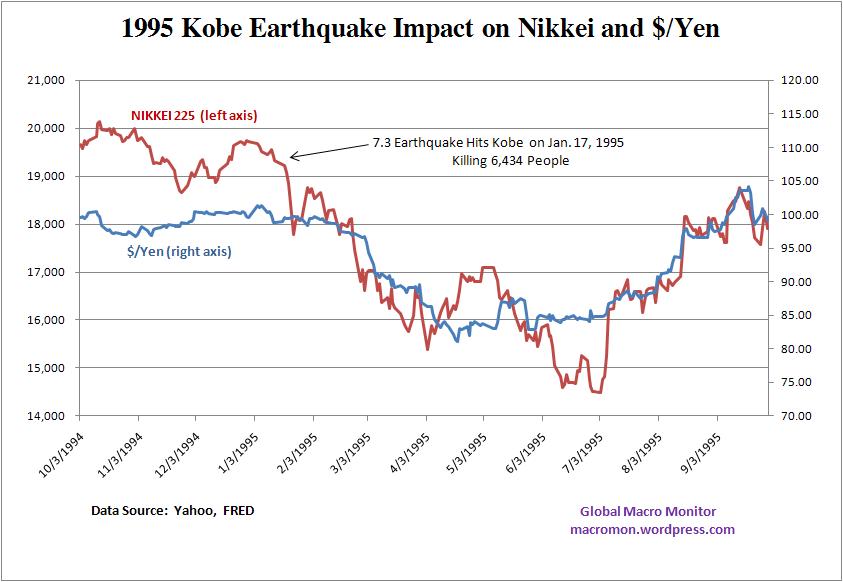
I have not previously had such a clear case of "compare and contrast" as with this example of the Kobe quake in 1995 vs. the recent quake and Tsunami in northern Japan.

I discovered that the richer portrayal I  am getting this time of what is going on is through the combination of traditional media, social media AND personal contacts I maintain through social media and other means. It's almost like different brush strokes of a painting, all of which help fill it out. I wouldn't have had the full picture if I didn't have all four devices there in front of me, as described earlier here and in this PBS MediaShift piece.

Print, TV and radio are relatively linear. You start at one point, keep going along a straight line, and then come to the end once you finish consuming. Digital, however, can be entered at multiple points, and the timeline and consumption pattern is up to you. It's many dimensions all at once. Perhaps I can say it’s 4D: length or top-to-bottom, start-to-finish  [text or linear video or audio]; width or sideways [slideshows for example]; depth [links that let you jump through “stacks” of information];  plus time. I could compress time, by reading the posts of my friend on Facebook, who was sharing what she was seeing on TV. I could scan her wall posts all at once, and not have to watch for the full length of time she did to learn what was happening. I could combine the various dimension -- for example watch a TBS TV stream from Japan saying there are no deleterious health effects at the same time that someone on Twitter was worrying about whether they could go outdoors in Tokyo.

It also pointed up to me something that had always nagged at me when I was a foreign correspondent -- how little I, or anyone, could portray about the way things really were on the ground because we were limited to whatever constructs were there -- the breaking news wire report, the 45-second radio interview or 2-3 minute TV or radio spot, the 1,200, or even 3,000-word written piece. Inverted pyramid. The need to use space or time to explain the basic facts.


I usually monitor Twitter professionally, getting facts, figures, information, leads, and was surprised with how much of the raw Twitter stream was taken up with exclamations that were simply emotional, in Japanese. "How horrible!" "I can't believe this is happening." "Oh, No." "Wow". It brought home to me how people are using these media to get things off their chest in a way that they would use conversation for, and that others were jumping in to console or comfort them or share sympathy.

For those who would like to know more, or help, here is a link to a page of resources about the quake and Tsunami.

The Japanese Earthquake - Media and Feelings

UPDATE: I've written a longer and more detailed account of the below here, for PBS MediaShift.
= = = = =
The reports and pictures of devastation in Japan  reminded me of reporting on the earthquake that leveled Japan's port city of Kobe in 1995. I pray that this time the death toll turns out to be smaller than the 6,000-plus killed those years ago. The pain for me is, perhaps, sharper because of the memories, and that this many years later my friendships there have grown that much deeper.

As a media participant and observer, what struck me this time was how rich and multifaceted the information flow was. Then, I sat in the AP bureau in Tokyo, trying to understand what I could from Japanese broadcast news reports. We were sometimes able to reach someone , official or not, in the Kobe region via phone for a quick interview. We, of course, covered the major news conferences. I (and we, I believe) relied largely for information on the reporters and photographers  (including me three weeks, then six months after the quake) who were dispatched to the scene. Listening to and watching the broadcast channels, and the other wire services was an overwhelming and chaotic, but by today's standards, thin experience.

 Today, sitting in my living room in New York, I felt I had more information at my fingertips than I did then in the AP bureau in Tokyo. In front of me I had a TV connected to digital cable, an iPad, a Blackberry and a Web-connected computer. I got ahold of one Tokyo resident, one of my best friends, via his cellphone in Osaka. I confirmed another close friend in Tokyo was fine by reading her Facebook wall.Yet another I could see was OK by reading her bylines in AP reports. (She was, understandably, quite quiet on Twitter). I meanwhile, was able to watch Japanese TV channels via Ustream links I was referred to by my New York-based friend Sree Sreenivasan. I dipped into the Twitter and Facebook streams as I could. I flipped among reports from multiple publications and sources -- a New York Times slideshow here, a BBC TV show there. A decent amount of the Twitter stream, especially in Japanese, was not very useful in an informational sense; exclamations of relief or horror, or people making strange exclamations that seemed almost senseless. But there were also referrals to data, reports, information I could tap into all at my fingertips.

Each medium served its purpose, and none was better than the other, especially. The sheer amount of video, of course -- from a country that may have more cameras and camera-equipped cellphones than any other per capita -- was that much greater. Even on TV, I saw constantly updated videos among the various channels, rather than the same loop of packaged videos one tended to see in the TV-only era, and some of that video was from handheld cameras and cellphones. My friend in Tokyo, an American who is a very fluent translator, fed us information from Japanese news reports and her own eye-witness accounts. I learned, and was able to confirm, details large and small: that this was either the 5th or 6th largest quake in recorded history, that a nuclear plant was having trouble with its coolant, that 200-300 had died in one area, that a bunch of new cars were washed from a port, that 2 people had died in one town, 7 in another. I learned, by looking at captions of photos, of the geographic expanse affected and imagined what it was like in train stations and an airport I had visited where planes were now strewn about like children's toys. I wasn't reporting, but the feeling of being overwhelmed with data, getting reports that seemed wrong or needed clarification, not being sure what sources could be trusted, and knowing that numbers and quantifications would change (often for the worse) was the same. The feeling of being connected was much stronger, this much farther away.

So far, it seems, all those I know are fine, though I fear the missive that tells me who among my circle has suffered. I know the disaster will be felt for many many months, as it was in Kobe. We'll all feel it, if nothing else, in the way stock markets react and as there are hitches in manufacturing and shipments of Japan-made cars and other goods.</div><br /> In some ways, the connections this time were stronger and richer than they could have been then. My Tokyo friend's uncle and other relatives and friends logged on from New Jersey and wished her well. Friends in the U.S. asked about my loved ones in Japan in a way that was easy to handle but would have been intrusive in an era when we all had to rely on phones. Again, the media and communication did not change the event, fundamentally, but did change the way we were able to experience and share it. Resources like the Google people finder  in Japanese and English, and some social media outreach may have even changed things in a more fundamental way.

Social Tips and Tools

In honor of Social Media Week (#smw11), Dorian (@dbenk) and others @teemingmedia are tweeting about everything from valuations of media companies in the social age, to how to promote books through Twitter, Facebook and more.

They also give some links to some of their resources, readings and tools.

Twitter as a Media Company

."Twitter is a media company: It gives you cool stuff to look at, you pay attention to what it shows you, and it rents out some of your attention to advertisers." from Twitter COO Dick Costolo On Ad Sales and the New Twitter.com | Peter Kafka | MediaMemo | AllThingsD

True enough. But don't forget the way Twitter is defining "media" at least openly in their news conference today, included YouTube and Flickr. In other words, platforms that put forth media others have created.

For more on Twitter's new .com overhaul see previous post: Can Twitter Seize the Desktop?

Being Social With Architects

I was invited to be on a panel for the architecture group AIA last night, and found that not only is the Haworth Showroom a very nice venue, but also that architects, like many, are grappling with how to use social media, what one can do to raise one's image, get new clients, follow the "rules" and otherwise figure out how to works.

Some of the main points I raised were that it's important to experiment, cultivate and get better over time ("iterate" is one way of putting it). One audience member asked how to use social media like Twitter, which is quick and short bursts persistently, in the course of managing long-term architectural projects. "In the course of managing the project, don't you find yourself considering a lot of things, checking in often as you make decisions?" I replied, "Wouldn't it be nice if you could, for example, Tweet that you were considering a certain wood for a certain type of situation, say a damp environment, and get feedback from others in the community about woods they'd used that were particularly effective for your situation? Or cement. Or doorknobs." He made the point that you will not only gain interested followers who want to learn about your projects, and potentially pick up new clients that way, but also get "inbound marketing" intelligence that may be useful to your business.

Adam Lutz, facilities manager of Google, talked about how a niche brewery instilled passion among avid fans by being very participatory in social media. Mike Plotnick, Media Relations Manager, at the architecture firm HOK talked about how they'd started HOKLife and let 30 staff members talk about what they were doing around the world -- and that sometimes it was a risk (they said things in ways that weren't quite "on message") but ultimately the brand was carried by them,a nd spread more. Jessica Sheridan, Editor-in-Chief of eOculus, talked about how she'd found sources, stories and more on Twitter and other social media.

You can see more coverage by looking on Twitter at the hashtag #aianysocialmedia.